Impact of Nanomization and Particle Size Distribution on the Cycling Performance of Long Cycle LMFP
In the technological evolution of phosphate-based cathode materials, nano-sizing and particle size distribution have gradually become important factors affecting cycling performance. It is widely believed in the industry that reasonable control of particle size can improve the electrochemical reaction interface of the material, providing a more stable migration channel for lithium ions during charging and discharging. Against this backdrop, material optimization work centered on Long cycle LMFP is continuously advancing, with related research and industrial applications deepening simultaneously.
From a mechanistic perspective, nano-sizing can shorten ion diffusion paths and improve reaction activity, but it also places higher demands on structural stability. Uneven particle size distribution or excessively large specific surface area may lead to increased side reactions and complex interface film evolution. Therefore, controlling particle size distribution to achieve synergistic distribution of different sized particles has gradually become an important technical path for improving cycle life. Long cycle LMFP materials developed based on this idea exhibit a more balanced performance between rate capability and cycle stability.
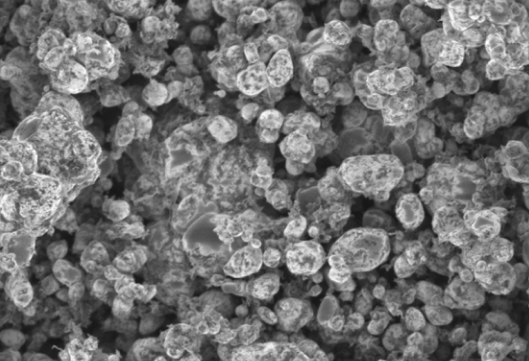
Meanwhile, process control in the manufacturing stage also plays a crucial role, including precursor reaction conditions, sintering temperature window, and post-treatment methods, all of which affect particle morphology and structural integrity. Some companies have introduced multi-stage particle size design to achieve a more suitable match between compaction density and ion transport, thus demonstrating stable performance in long-cycle applications. Currently, the application of Long cycle LMFP has gradually extended to energy storage systems and power batteries.
From market feedback, end-users are more concerned about the consistency and reliability of materials during long-term use. The combination of nano-sizing and particle size distribution technologies allows for a more uniform stress distribution during the cycling process, and the rate of structural degradation is controlled to a certain extent. With continuous process optimization and application verification, the role of Long cycle LMFP in future battery material systems remains worthy of continued attention from the industry, and its technological path will continue to evolve with changing demands.
Comments
Post a Comment