How Does the Particle Morphology of Lithium Iron Phosphate Affect Rate Performance
With the continuous development of new energy technologies, the performance optimization of power batteries has become a core focus of the industry. Among these, the particle morphology of the cathode material plays a crucial role in the battery's rate performance. Recently, LBM New Energy Technology has made significant progress in the development of Lithium Iron Phosphate materials by precisely controlling particle morphology and size distribution.
In Lithium Iron Phosphate cathode materials, particle morphology directly affects the diffusion rate of lithium ions and electron conductivity. Studies show that materials with uniform particle size and smooth surfaces can provide a more stable electrochemical reaction interface, thus exhibiting better capacity retention under high-rate charging and discharging conditions. Simultaneously, the close packing of particles can reduce porosity and increase the volumetric energy density of the material, but excessive aggregation may affect electrolyte penetration, thereby limiting fast charging and discharging performance.
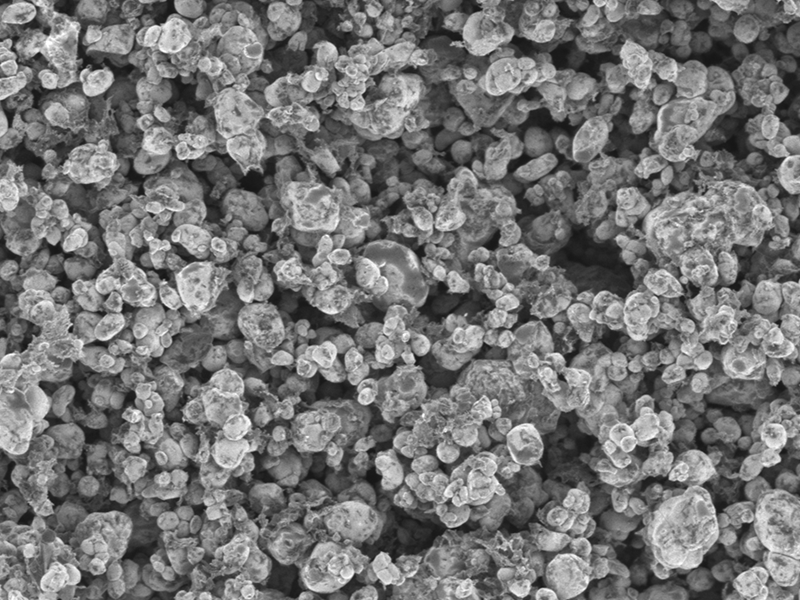
During the production process, LBM New Energy Technology controls the synthesis conditions of the precursor and the heat treatment process to achieve a reasonable particle size distribution in the Lithium Iron Phosphate material. This method not only improves the electron and ion conduction pathways of the material but also optimizes its structural stability, helping to maintain high capacity over multiple cycles. The company's technical team also performs moderate surface modification of the material to improve interface compatibility, further enhancing performance at high rates.
Furthermore, for power battery applications, the optimization of particle morphology also involves matching it with the overall battery design, including electrode thickness, electrolyte permeability, and current collector contact efficiency. Through systematic process control, a synergistic optimization of material characteristics and battery design is achieved, providing more reliable material assurance for new energy vehicles and energy storage systems.
In summary, the particle morphology of Lithium Iron Phosphate cathode materials plays a critical role in optimizing rate performance. With the refinement of preparation processes and the improvement of performance control methods, its potential for application in high-rate, long-life power batteries will be further enhanced in the future. We will continue to conduct in-depth research and development in material micro structure design and electrochemical performance optimization to provide sustainable, high-performance solutions for the industry.

Comments
Post a Comment