Post-Maintenance and Maintenance Management Strategies for Alloy Wheel Painting Lines
In the automotive parts manufacturing industry, alloy wheel painting lines play a crucial role in improving product appearance quality and corrosion resistance. With increasing automation and more complex equipment structures, the importance of post-maintenance and maintenance management is becoming increasingly prominent. Scientific and systematic maintenance strategies not only affect production efficiency but also directly impact product quality and enterprise operating costs.
Daily maintenance of alloy wheel painting lines should focus on preventative management. By establishing a standardized inspection system, regular checks of the pretreatment system, painting equipment, drying oven, conveyor chain, and electrical control system can identify potential problems promptly, preventing line shutdowns due to localized malfunctions. In particular, the spray gun system and paint supply lines require regular cleaning and calibration to prevent blockages or uneven spraying that could affect the surface quality of the wheel hubs.
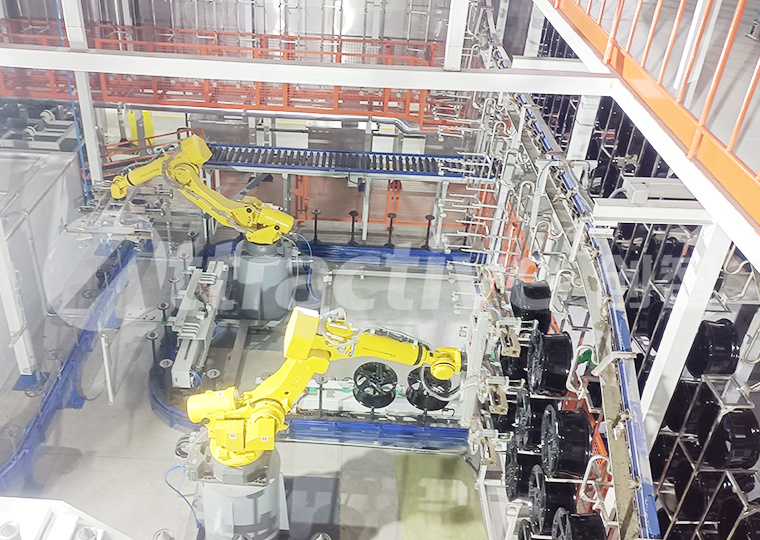
Regarding the management of key components, a tiered maintenance mechanism should be implemented. Periodic lubrication and wear checks should be performed on high-load operating conveyor systems, motors, and reduction gears to extend their service life. The temperature control system of the drying oven needs regular temperature accuracy calibration to ensure stable and consistent curing results. Maintenance of filtration systems and environmental treatment devices is equally crucial. Timely replacement of filter elements and cleaning of pipelines help maintain a clean environment and meet environmental standards.
Information management is also an important aspect of modern coating line maintenance. By establishing an equipment operation data recording and analysis system, the operating status of equipment can be monitored in real time, and abnormal situations can be warned in advance. Combining production data with equipment fault records allows for the optimization of maintenance cycles and the creation of more precise maintenance plans, thereby improving overall equipment efficiency.
Personnel training is also a key aspect of maintenance management. Operators and maintenance personnel should be familiar with the equipment structure and process flow, and possess basic fault diagnosis and handling capabilities. Standardized operating procedures can reduce damage to equipment caused by human error and improve the overall stability of the line.
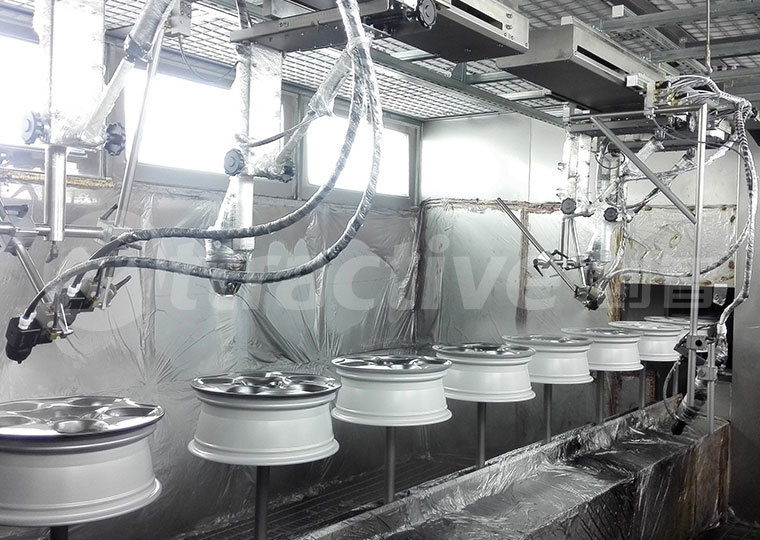
Regarding spare parts management, a reasonable inventory mechanism should be established. Safety stock standards should be set for vulnerable parts and critical components to avoid production delays due to spare parts shortages. Simultaneously, maintaining technical communication with equipment suppliers to obtain upgrade and improvement solutions provides support for the long-term stable operation of the equipment.
The post-maintenance and upkeep management of alloy wheel painting lines requires comprehensive planning from multiple dimensions, including system construction, technical monitoring, personnel training, and spare parts management. Only by establishing a systematic and continuous management system can we ensure that the coating line operates stably and efficiently under high-load production conditions, thus creating a long-term guarantee of quality and efficiency for the enterprise.

Comments
Post a Comment