The Role of Alloy Wheel Painting Lines in Corrosion Resistance Treatment
Alloy wheels, as crucial exterior and load-bearing components of automobiles, are constantly exposed to rain, salt spray, gravel, and complex climatic environments, making them highly susceptible to oxidation and corrosion. Especially in coastal areas or regions where de-icing agents are frequently used in winter, the corrosion resistance of wheels directly impacts their service life and appearance. The alloy wheel painting line plays a key role in this context, effectively enhancing the overall corrosion resistance of the wheel through a systematic and standardized surface treatment process.
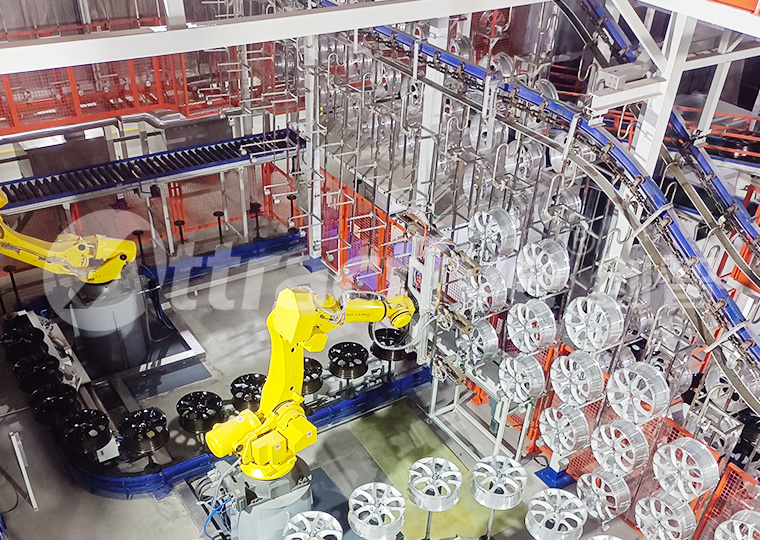
The alloy wheel painting line lays the foundation for corrosion resistance in the pretreatment stage. Before formal painting, the production line typically includes processes such as cleaning, degreasing, oxide film removal, and surface activation. This thoroughly removes oil, impurities, and oxide layers from the wheel surface, ensuring a clean substrate surface and good coating adhesion. This process not only reduces coating defects but also guarantees the stability of the subsequent anti-corrosion coating.
The painting production line significantly enhances the corrosion resistance of the wheel through a multi-layer coating structure. The primer layer typically possesses excellent rust prevention and adhesion properties, forming the first protective barrier on the alloy substrate surface. The intermediate coating enhances film thickness and overall sealing. The topcoat layer balances decorative effect and weather resistance, effectively resisting UV rays, humid and hot environments, and chemical corrosion. The synergistic effect of multiple coating layers ensures stable performance of the wheel hub even in complex operating environments.
Automation and parameter control capabilities are particularly important for corrosion-resistant treatment in alloy wheel painting lines. By precisely controlling spray thickness, spray gun angle, curing temperature, and time, the production line ensures a uniform and dense coating, preventing corrosion risks caused by areas of insufficient thickness or curing. Consistent and stable process output contributes to improved reliability of wheel products during long-term use.
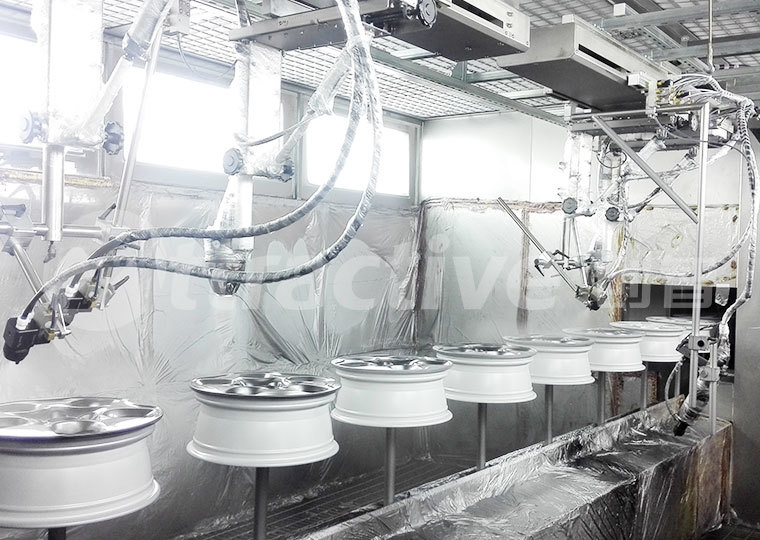
Modern alloy wheel painting lines place greater emphasis on the application of environmentally friendly anti-corrosion technologies. Employing low-volatile coatings and efficient recycling systems, they improve corrosion resistance while reducing environmental burden, meeting the automotive manufacturing industry's requirements for green production.
Through a comprehensive application of advanced pretreatment processes, multi-layer protective coatings, precise automated control, and environmentally friendly technologies, the alloy wheel painting line plays an irreplaceable role in the corrosion resistance treatment of wheel hubs, providing a solid guarantee for improving product quality and service life.

Comments
Post a Comment