The Positive Significance of Electrostatic Painting Lines in Reducing Paint Waste
With the increasing demands for cost control and green production in the manufacturing industry, material utilization efficiency in the coating process is receiving more and more attention from enterprises. Traditional coating methods often suffer from problems such as paint scattering and uneven coverage in actual production, resulting in high paint waste. In contrast, electrostatic painting lines, with their stable and controllable coating method, demonstrate significant advantages in reducing paint waste, becoming an important choice for modern industrial coating.
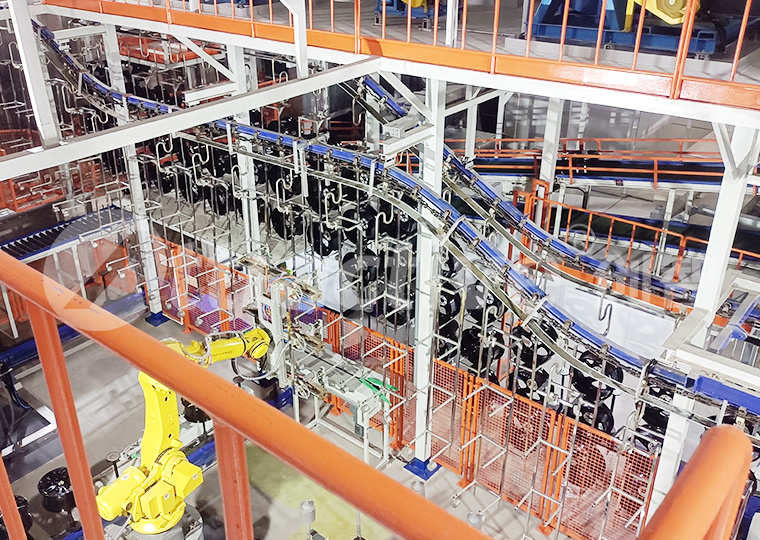
First, electrostatic painting lines can significantly improve the effective adhesion rate of paint. During the coating process, paint is more easily adsorbed onto the workpiece surface under electrostatic effects, thereby reducing ineffective spraying and material waste. This directional adsorption characteristic allows the paint to be more concentrated in the area to be coated, helping to improve the actual utilization efficiency of the unit paint.
Second, electrostatic painting lines help improve the uniformity of the coating. Uniform coating distribution not only improves the appearance quality of the product but also avoids repeated spraying caused by localized overly thick or thin coatings. Repeated spraying is often a significant source of paint waste, but electrostatic painting lines reduce unnecessary material consumption at the source by achieving stable and uniform coating results.
From a production process perspective, electrostatic painting lines have a high degree of automation, and coating parameters are more controllable. This controllability helps companies rationally adjust paint usage based on different workpiece characteristics, avoiding over-spraying. Through process standardization and consistent operation, paint use is more precise, further reducing overall waste levels.
Furthermore, reducing paint waste has positive implications for the company's environmental management. Improved paint usage efficiency means a corresponding reduction in volatile organic compounds and emissions, helping to improve the production environment and reduce environmental pressure. This not only aligns with the current trend of green manufacturing but also helps companies achieve better performance in compliance management and social responsibility.
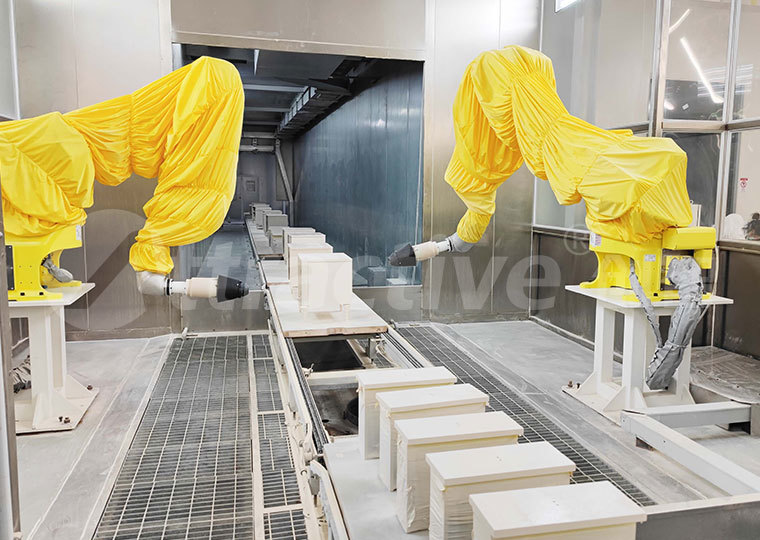
From a long-term operational perspective, electrostatic painting lines, while reducing paint waste, also bring sustained cost advantages to companies. As a major consumable in the coating process, improved paint usage efficiency directly translates into optimized production costs, benefiting companies by enhancing overall profitability and market competitiveness.
Electrostatic painting lines play a significant role in reducing paint waste by improving paint adhesion efficiency, coating uniformity, and enhancing process controllability. As the manufacturing industry continues to pursue refinement and sustainable development, the value of electrostatic painting lines will become even more apparent.

Comments
Post a Comment