Is Small-Batch Liquid Cold Plate Customization Cost-Effective? In-Depth Analysis
In industries such as electronics, communications, new energy, and medical, liquid cold plates are increasingly becoming the mainstream cooling method for high-power equipment due to their efficient heat dissipation. However, many small and medium-sized enterprises often only require small batches of liquid cold plates during product development or pilot production. A common question in this situation is: Is small-batch customization of liquid cold plates cost-effective? From the perspectives of cost, efficiency, flexibility, and long-term value, the answer is not absolute.
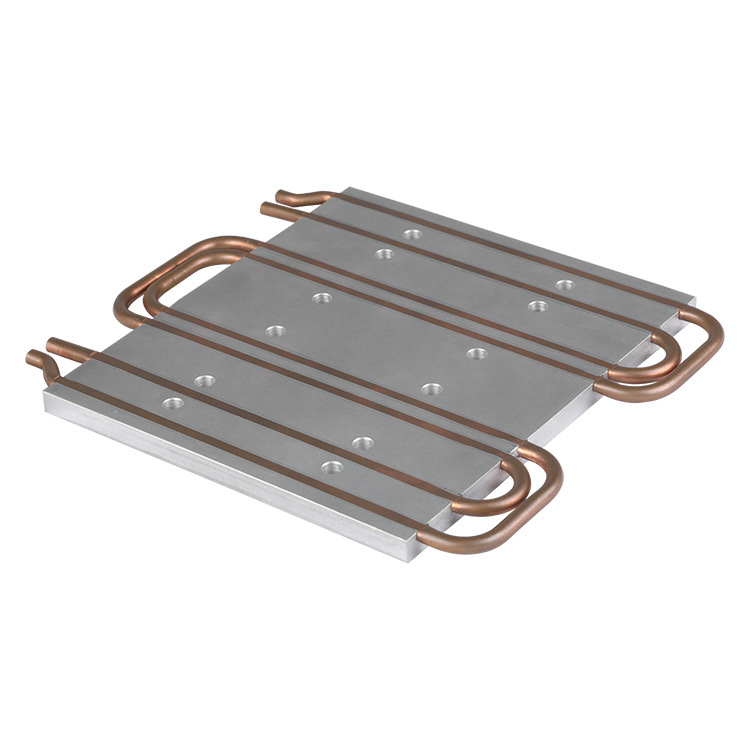
First, from a cost perspective, small-batch customization of liquid cold plates is generally more expensive per unit. Liquid cold plate manufacturing involves precision processes such as CNC machining, brazing, and friction stir welding. These initial costs require design, mold creation, and process verification. These fixed costs are spread over a small number of products, resulting in a higher price per unit. Considering unit price alone, small-batch customization may not be cost-effective.
Secondly, from the perspective of R&D and pilot production, small-batch customization offers irreplaceable advantages. During new product development, companies need to verify heat dissipation performance and structural compatibility. Small-batch customization allows for rapid sample production and testing, allowing for timely identification of issues and design optimization before mass production. This not only reduces the risk of subsequent mass production but also prevents greater financial losses due to design flaws.
Third, flexibility and personalization are key advantages of small-batch customization. Some companies face rapid product updates and numerous models, and market demand fluctuates unpredictably, making large-scale production unsuitable. Small-batch customization allows companies to adjust the design and parameters of liquid cold plates based on actual needs, meeting specific application scenarios while avoiding inventory backlogs.
Furthermore, from a long-term perspective, small-batch customization holds strategic significance. For startups or new projects, implementing small-batch customization to meet testing and small-scale market needs before gradually transitioning to mass production not only reduces capital investment risk but also allows them to accumulate process experience, laying the foundation for subsequent large-scale manufacturing.
While small-batch customization of Liquid Cold Plate may not be cost-effective in terms of unit price, its value in R&D verification, flexible adjustments, and risk control cannot be ignored. For companies requiring rapid trial production and flexible market adaptation, small-batch customization is a wise choice. Once stable mass production is achieved, cost reduction through large-scale production can lead to true economic benefits.

Comments
Post a Comment