Study on the performance stability of Liquid Cold plate under different working conditions
Liquid Cold plate plays a key role in many heat dissipation demand scenarios, but its performance stability under different working conditions is an important topic worthy of in-depth exploration.
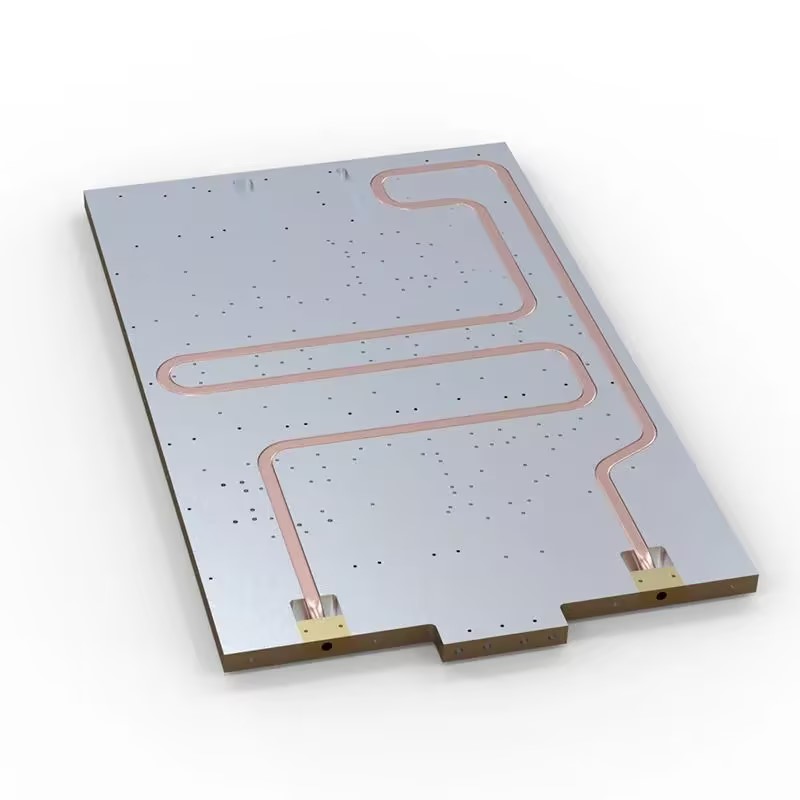
Under different temperature conditions, the performance stability of Liquid Cold plate faces challenges. For example, in high temperature conditions, the thermal expansion of liquid in Liquid Cold plate is more obvious. If the structural design of Liquid Cold plate is unreasonable, it may cause excessive internal pressure, affecting the normal flow of liquid, thereby reducing the heat dissipation efficiency. At the same time, high temperature may also affect the performance of Liquid Cold plate materials, such as the thermal conductivity of metal materials may change. Under low temperature conditions, the viscosity of the liquid increases and the flow resistance increases. This requires the pumping system of Liquid Cold plate to have sufficient power to maintain the circulation of the liquid, otherwise local overheating is prone to occur.
Different load conditions also have a significant impact on the performance stability of Liquid Cold plate. High load means higher heat generation, and Liquid Cold plate needs to take away the heat quickly and effectively. When the load increases instantly, the Liquid Cold Plate needs to be able to quickly adapt to this change to avoid thermal runaway. This not only tests the heat dissipation capacity of the Liquid Cold Plate, but also puts forward requirements for its thermal response speed.
Under different working environment vibration conditions, the internal connection structure of the Liquid Cold Plate may be affected. If the connection is loose or cracked, it will cause liquid leakage, which will make the entire cooling system ineffective.
To ensure the performance stability of the Liquid Cold Plate under different working conditions, it is necessary to start from material selection, structural design, pumping system optimization and other aspects. For example, select materials with small thermal expansion coefficients and stable performance over a wide temperature range, design a reasonable flow channel structure to adapt to the flow of liquids with different viscosities, and strengthen the internal connection structure to resist vibration. Only in this way can the Liquid Cold Plate reliably perform its heat dissipation function under complex and changeable working conditions.

Comments
Post a Comment