Planetary gear tooth profile modification
Compared with ordinary gear transmission, Planetary gear transmission system has the advantages of compact structure, strong load-bearing capacity, large power transmission and high efficiency, and is widely used in aviation, automobile, shipbuilding, metallurgy, engineering machinery and other fields. Planetary gear transmission has become a widely used speed change mechanism in power transmission due to its simple structure, small axial size and good processability. However, in the usual design process of gear transmission system, only the static strength problem of Planetary gear transmission system is concerned, resulting in excessive vibration and noise in the operation of gearbox, which not only affects the service life of gearbox, but also seriously pollutes the environment.
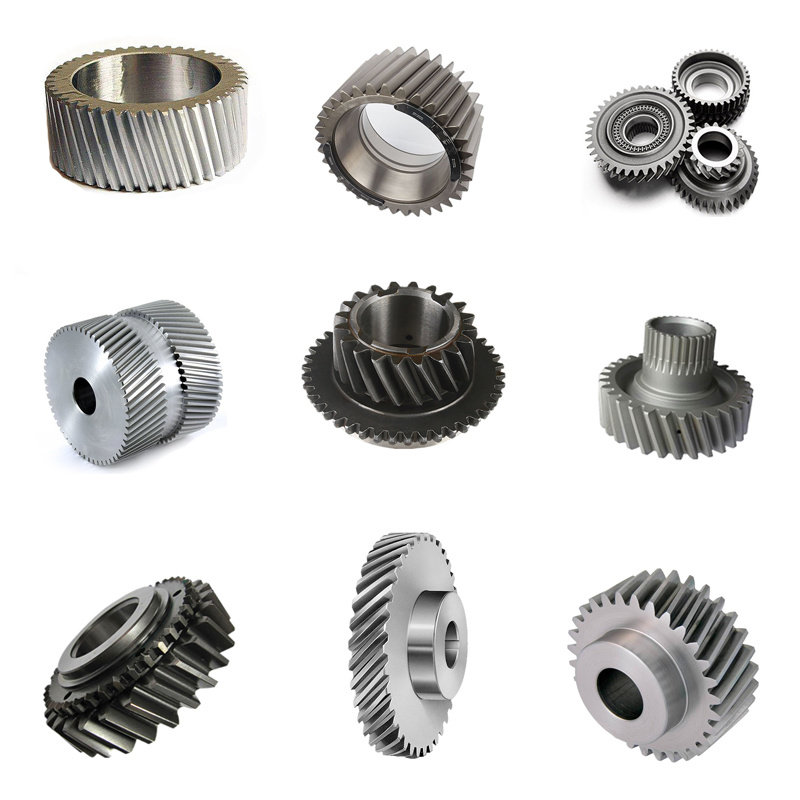
Today we introduce the basic principles of gear tooth profile modification and tooth direction modification, and then elaborate on the selection or calculation method of design elements of these two modification methods.
Based on the static characteristics of the gearbox, the tooth profile and tooth modification of the Planetary gear are studied. The maximum modification amount of the tooth profile modification is aimed at minimizing the transmission error of the gear pair; the determination of the drum amount of the tooth modification takes into account the small normal load peak per unit length of the meshing gear and the load peak as much as possible distributed in the center of the tooth width. Finally, the specific modification size is obtained, and the changes in various static performances before and after the modification are obtained.
The three-dimensional contact nonlinear dynamic model of the Planetary gear system-bearing-box of the Planetary gear is established using finite element software, and the dynamic performance of the gearbox before and after the modification is solved using the dynamic display algorithm.
In the meshing process of a pair of teeth, various factors will cause serious excitation. In order to make the meshing smooth, reduce the impact of meshing in and out caused by base pitch error and load deformation, and improve the lubrication of the tooth surface, the original tooth profile is removed from the tooth top and the two side end faces of the gear, so that the tooth profile at this location is no longer the original shape. This is the so-called tooth profile modification. After trimming, in the alternating process of gear meshing, the additional impact caused by machining equal division error, assembly error, etc. is effectively alleviated, making the operation stable and reducing noise and vibration.

Comments
Post a Comment